Quick Answer
When we have dogs and children, we sometimes aim for too much. Start by having them co-exist together rather than expecting them to be best friends.
When we bring a dog into a family with children, it's natural to dream of them becoming the best of friends. But sometimes, aiming for co-existence is a much better starting point than expecting an instant best-friend relationship.
Lower Your Expectations
Children and dogs are both unpredictable, and expecting them to instantly bond can put unnecessary pressure on both. Instead, focus on creating a calm, safe environment where they can simply exist in the same space without the pressure to interact.
Co-existing, Not Interacting
Co-existing means your dog and child can be in the same room, each doing their own thing, without stress or conflict. This is actually a huge achievement and builds the foundation for a stronger relationship over time.
Easy Activities to Start With
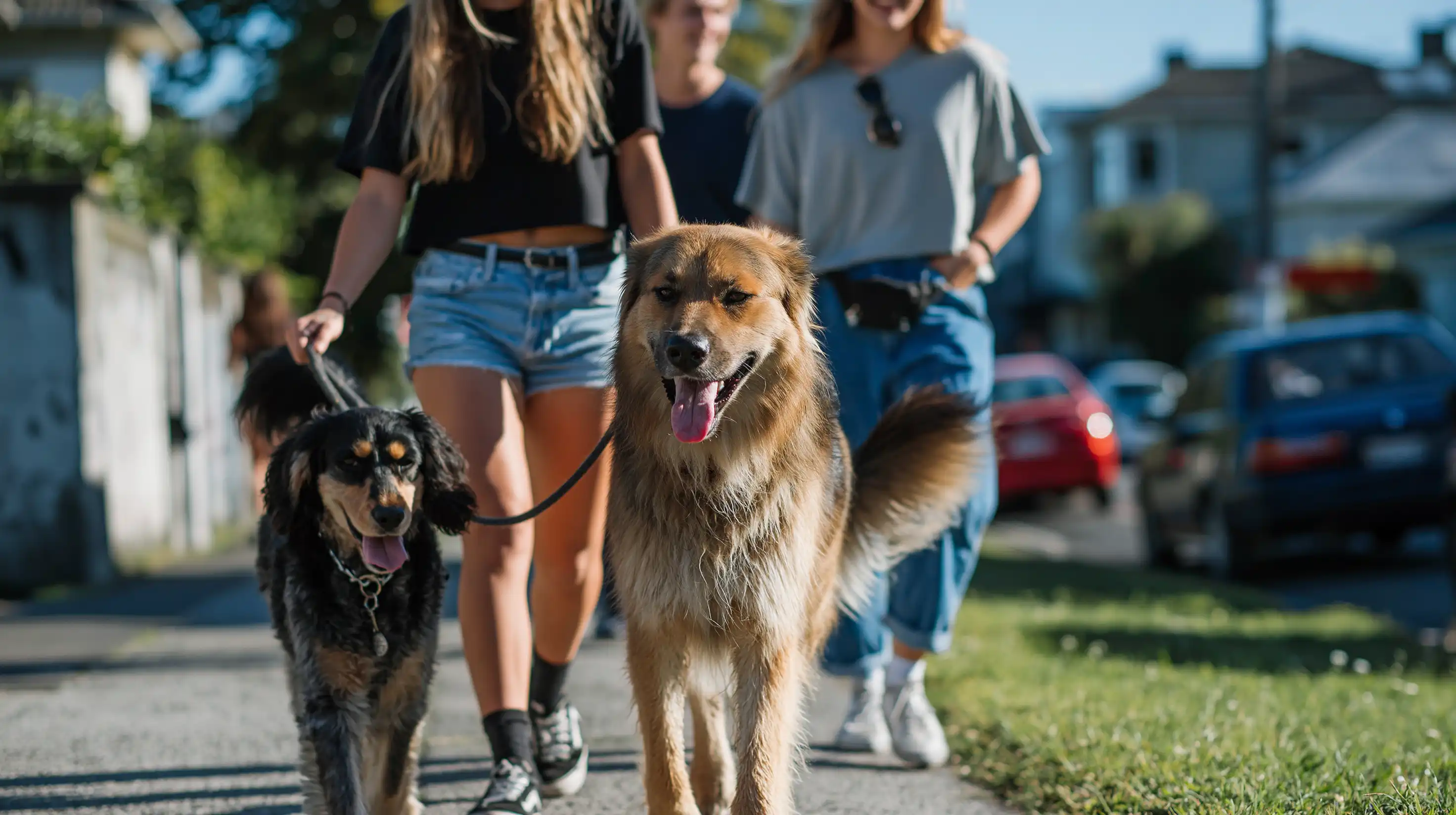
- Short walks together - Use a double lead so the child can "help" walk the dog safely alongside an adult
- Highchair fun - While baby is safely in a highchair, dog can be nearby getting treats for calm behaviour
- Supervised fetch - Child throws the ball, dog retrieves it - interaction without close contact
- Parallel play - Child plays with their toys, dog plays with theirs, in the same space
Building a No-Pressure Relationship
The beauty of this approach is that it removes pressure from everyone. Your dog doesn't feel overwhelmed by a grabby toddler, and your child learns to respect the dog's space. Over time, mutual trust develops naturally.
Remember: a dog that chooses to approach and interact with a child is far more valuable than one that's forced into it. Patience and respect will build a beautiful bond in time.
Laura McHugh, Constructive Canines
PITC Expert