Quick Answer
If your daily walks around Auckland feel more like tug-of-war than quality time - or if neighbour complaints about barking are creeping in - you're not alone. City living, busy schedules, and changing routines can magnify common dog behaviour problems.
Common Dog Behavior Problems Auckland Owners Face (And How Training Can Help)
If your daily walks around Auckland feel more like tug-of-war than quality time or if neighbour complaints about barking are creeping in you're not alone. City living, busy schedules, and changing routines can magnify common dog behaviour problems.
Why Auckland Dogs Struggle
Life in Tamaki Makaurau moves fast. Apartments, busy roads, packed beaches, and changing off-lead rules mean more noise, more dogs, and more surprises in small spaces. Building sites, summer events, and fireworks add to the pressure.
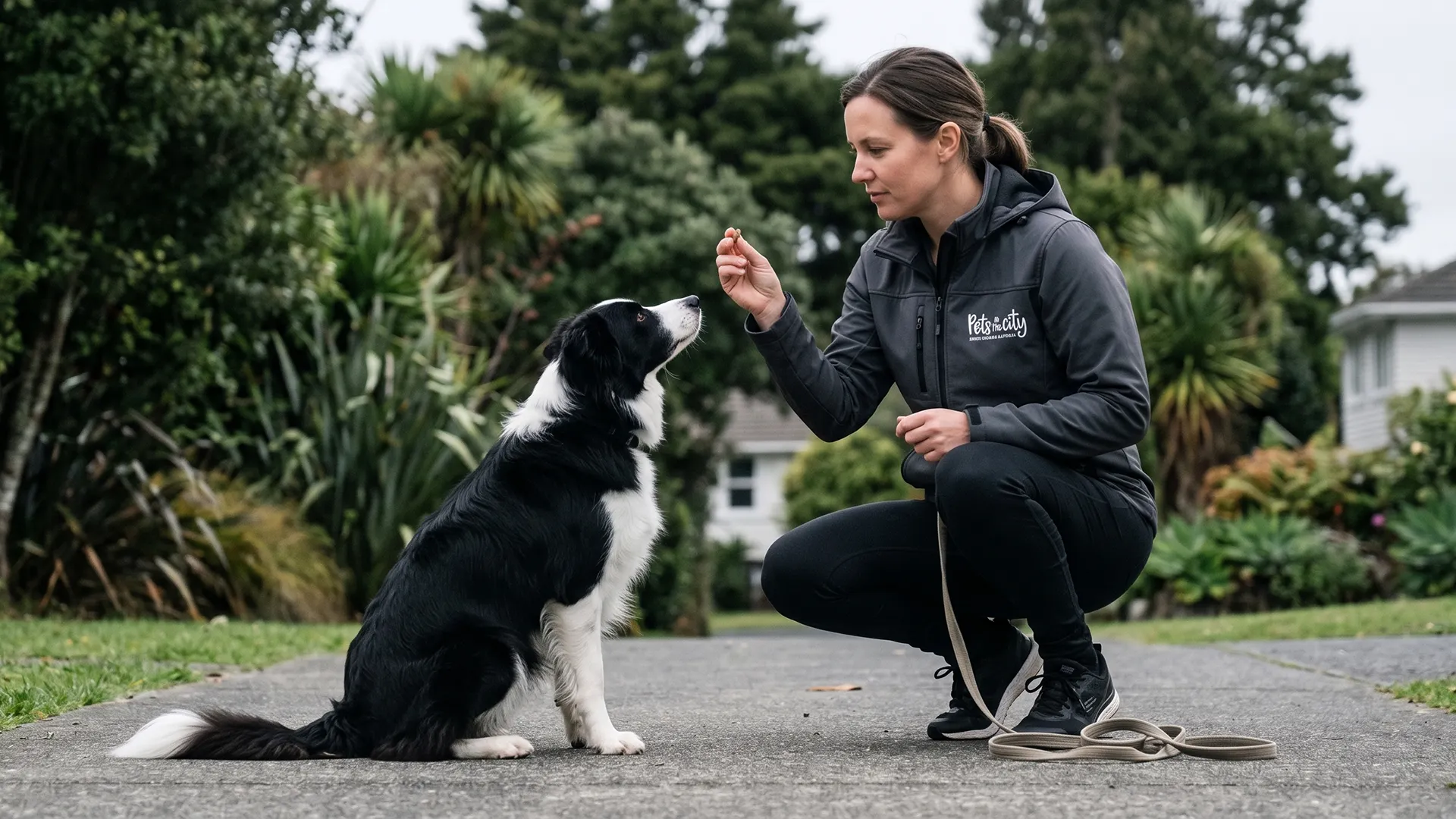
Force-free, positive training gives your dog real skills for these situations. You teach your dog what to do when another dog passes on the path at Meola Reef. You show your dog how to settle when tradies work next door.
Four Common Behaviour Problems and Practical Fixes
1) Excessive barking at home: Meet basic needs first. A sniff walk and ten minutes of food enrichment lower arousal. Teach quiet in a kind way - notice and reward silence after a trigger. Use frosted window film, white noise, and steady routines.
2) Leash reactivity and poor recall: Create distance first. Cross the road, step off the track, or use parked cars as visual blocks. Reward your dog for calmly looking and turning away. Build recall as a game using a long line in a fenced area.
3) Separation anxiety or home-alone stress: Practise short departures. Step out for seconds, then minutes, and return before your dog becomes distressed. Pair departures with a long-lasting chew.
4) Jumping up and overexcitement with visitors: Teach a clear station. Train your dog to go to a mat when the bell rings. Reward four paws on the floor before greetings. Keep greetings short, calm, and repeatable.
Auckland Dog Behaviour Tune-Up Checklist: Identify two main triggers. Meet daily needs with one to two walks plus sniffing time. Practise core skills five to ten minutes each day. Manage your home environment with window film, white noise, baby gates. Add structured support such as one to two daycare sessions per week.
PI
Pets In The City
PITC Expert