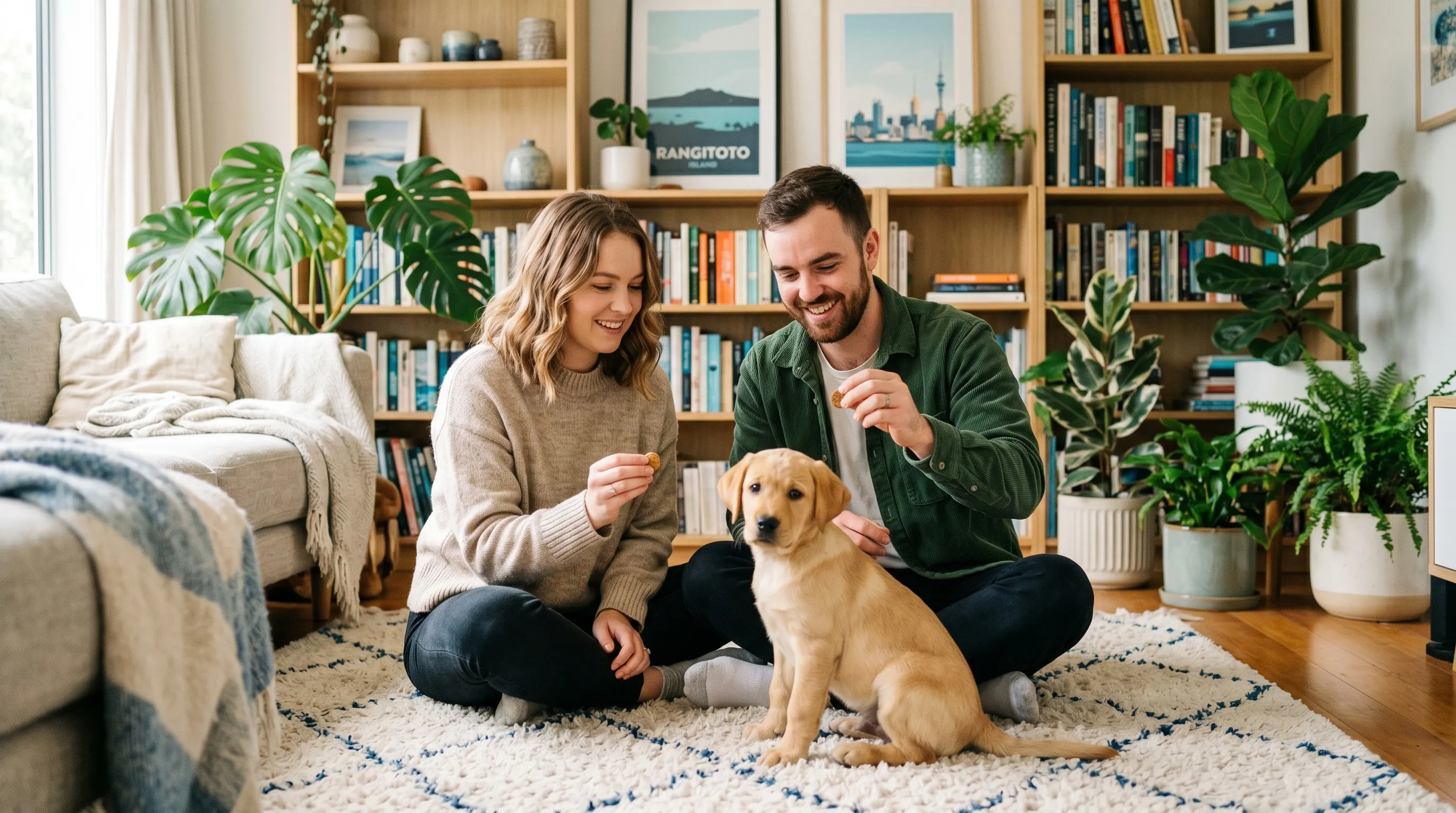
Quick Answer
New puppy in the house and not sure why toilet training, nipping, or sleepless nights feel harder than you expected? You're not alone - Auckland dog parents often tell us the first weeks are a blur of love, learning, and a few chewed slippers.
The Most Common Puppy Training Mistakes New Dog Owners Make (And How to Avoid Them)
New puppy in the house and not sure why toilet training, nipping, or sleepless nights feel harder than you expected? You're not alone - Auckland dog parents often tell us the first weeks are a blur of love, learning, and a few chewed slippers.
The Most Common Puppy Training Mistakes in Auckland
Inconsistent cues and rules: If you switch between "come", "here", and "c'mere", your puppy gets confused. Pick one cue and make sure everyone in your home uses it. Mixed messages from flatmates or guests slow progress.
Delaying socialisation past the critical window (3 to 14 weeks): Waiting for full vaccinations often means missing key learning time. Safe and controlled exposure matters more than the number of outings. Socialise your puppy to everyday Kiwi life - high-vis clothing, ferries, scooters, beach sounds.
Using punishment-based methods: Yelling or leash corrections often cause fear, especially in sensitive breeds. Puppies respond faster to reward-based training.
Expecting adult behaviour from a baby: Puppies chew, mouth, and have accidents. In Auckland, steady rain can delay toilet progress. Set up a covered toilet area or use grass mats to stay consistent.
Inconsistent toilet routines: Take your puppy out after sleep, meals, and play. If you live in an apartment, carry young puppies outside to avoid accidents in lifts and hallways.
Skipping rest and over-exercising: An overtired puppy bites more and listens less. Regular naps prevent meltdowns.
How to Avoid These Mistakes
Be consistent: Pick simple cues and write them on the fridge so everyone uses the same words.
Socialise safely and regularly: Aim for three to five short exposures each day, lasting two to five minutes.
Reward instead of punish: Reward behaviour you like within one to two seconds. Mark it with "yes" or a click.
Build routines: Feed at set times. Take your puppy out after meals, naps, and play. Schedule rest periods.
Get expert support early: Short coaching sessions can stop small concerns turning into bigger issues.
Pro tip: Try three-minute training sessions, three to five times a day. Frequent short wins work better than long sessions.
A Simple First 8 Weeks Plan
Weeks 1-2: Build foundations - set a clear toilet schedule, reward outdoor success immediately, teach name response.
Weeks 3-4: Socialise with purpose - introduce people of different ages and appearances, take short car rides, visit a quiet vet lobby.
Weeks 5-6: Teach core cues and alone-time - sit, down, come, leave it, drop. Start alone-time at one to five minutes.
Weeks 7-8: Take skills into public spaces. Progress to busier locations step by step.
8-Point Daily Puppy Checklist: Morning toilet straight after waking with reward outside. Breakfast in a food puzzle with brief training. Short social exposure to a new sight or sound. Midday toilet and calm nap. Afternoon play with structured chew swaps. Loose-lead practice indoors. Evening toilet, gentle handling practice, settle time. Final toilet before bed.
PI
Pets In The City
PITC Expert